Rules of Survival Legacy Stealth Tactics
Master silent movement, sound masking, and ghost rotations to become the predator other players never see coming.
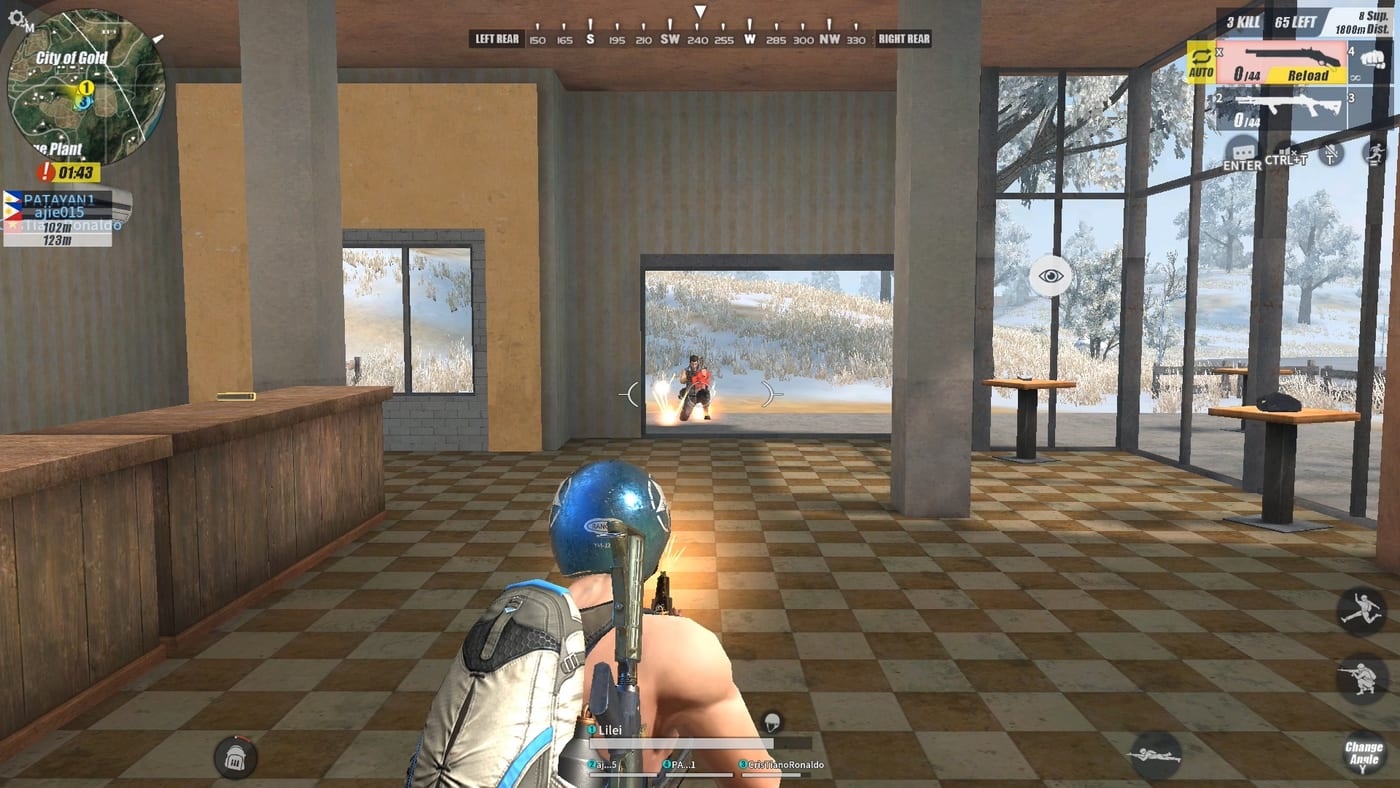
In classic Rules of Survival, the player who controlled sound controlled the lobby. Stealth was not passive鈥攊t was aggressive positioning that let you dictate when and where fights happened. Rules of Survival Legacy targets PC under Myth Games, still Under Development as of September 2026, but the stealth fundamentals from classic ROS transfer directly to whatever Myth builds. This guide covers silent movement discipline, sound-based positioning, suppression tactics, and ghost rotations that separated consistent top-ten finishers from players constantly reacting to enemies they never heard coming.
Stealth in battle royale serves two purposes: surviving long enough to reach final circles, and controlling engagements so you fight on your terms. Neither happens by accident.
Sound fundamentals for stealth
Classic ROS gave every action a distinct audio signature. Footsteps, vehicle engines, gunfire, healing items, and inventory management all produced sound your enemies could use to locate you. The silent player had information advantage鈥攌nowing where enemies were while remaining invisible to them.
Movement sounds by action:
Walking produced the quietest footsteps. Running added a heavier cadence that carried 15-20 meters further. Sprinting with stamina expenditure created the loudest movement signature and was almost never worth the exposure unless you were fleeing zone damage with no other option.
Crouch-walking reduced footstep volume significantly and limited audible range to roughly 8-10 meters. Prone movement was nearly silent at under 5 meters but severely limited your ability to return fire or reposition quickly.
Jump landing sounds varied by surface鈥攎etal decks amplified landings while grass and dirt absorbed some noise. Understanding surface audio helped you predict enemy approach angles in Training Base warehouses or Rust Bay dock sections.
Silent rotation discipline
Rotations were where stealth either paid off or fell apart. A perfect stealth rotation meant arriving at your next position without a single enemy knowing your route.
Planning silent rotations:
Before moving, stop and listen for 3-5 seconds. Count footsteps, vehicle engines, and gunfire directions. Identify which areas are active and which are quiet. Plan your path to use terrain that covered sound鈥攔ock ridges for grass-less zones, water crossings for river sections, building interiors for urban terrain.
Sound masking with terrain:
The zone border in classic ROS produced a persistent low hum that masked footsteps near its edge. Use this to your advantage when rotating through open ground in late zones鈥攖he zone noise literally covered your movement sounds.
Vehicle engines were excellent sound masks when timed correctly. If an enemy car passed 100-150 meters away, its engine noise covered your rotation for several seconds. Watch for vehicle routes and sync your movement to their passage.
Rain or environmental audio cues in certain map areas created natural sound cover. When available, use these to approach compounds or cross zones where enemies were likely to be listening.
Rotation timing:
The moment gunfire erupted at a location, you had a 15-30 second window where nearby players were focused on that engagement. Use that distraction window to complete rotations that would otherwise expose you. This was not luck鈥攊t was disciplined patience that converted noise into opportunity.
Sound-based positioning
Once your ears were tuned, sound became a real-time map that never lied to you.
Using audio to build a mental map:
Track every gunshot, vehicle, and footstep on a mental layer over the terrain. Gunfire direction told you where fights were forming. Multiple simultaneous firefights meant high activity zones to avoid or third-party. Vehicle stops indicated either enemy rotations or planned ambush points.
Healing sounds鈥攁udible med kit usage, bandage wrapping鈥攕ignaled wounded enemies. A player healing was a player vulnerable for 4-8 seconds. If you heard healing from an angle you controlled, you had a free elimination window.
Reload sounds were also identifiable by weapon type. A Thompson reload was distinct from an AWM bolt action. Knowing what weapons were cycling told you whether your enemy was dangerous or temporarily disarmed.
Sound distance estimation:
Volume scaled predictably with distance. Loud footsteps meant enemies within 10-15 meters. Moderate footfall suggested 20-30 meters. Quiet sounds at the edge of perception were 40+ meters away. With practice, you could triangulate enemy positions within 5-meter accuracy using only audio cues.
Combine distance estimates with your knowledge of building layouts from the Ghillie Island map guide to predict exactly which room, corner, or floor an enemy occupied.
Suppression tactics
Suppressed weapons in classic ROS created an entirely different tactical layer. The suppressed M4A1 at 200 meters sounded like a distant pop鈥攅nemies often failed to locate the shooter entirely.
Using suppression for stealth approach:
Equip a suppressed weapon when closing distance on a target you intended to engage. Your first shot would not reveal your position to the entire lobby. This let you get within 50-80 meters of an unaware enemy before they knew you existed.
Suppressed secondary weapons鈥攁 suppressed pistol鈥攍et you finish wounded enemies without broadcasting your location. If you tracked a low-HP player fleeing and had a suppressed sidearm, you could collect the elimination silently.
Identifying suppressed vs unsuppressed fire:
Suppressed shots had a distinct muffled crack with minimal echo. Unsuppressed shots boomed across the map with clear directional audio. If you heard a suppressed weapon being fired nearby, you were dealing with a player who had invested in stealth鈥攁pproach cautiously.
Unsuppressed gunfire was often a sign of either a new player or deliberate aggression signaling confidence. Either way, you knew exactly where they were.
Ghost play in late zones
Final circles amplified stealth value because every remaining player was hunting. The player who moved silently in final circles controlled the endgame.
Late-zone ghost rules:
Never run in final circles unless you were immediately fleeing death. Walk everywhere. Crouch-walk when crossing open ground. Time your movement to coincide with distant gunfire that masked your footfall.
Smoke discipline for stealth approach:
Smoke grenades created audio confusion in addition to visual cover. Enemies hearing footsteps inside smoke often held fire waiting for visual confirmation鈥攇iving you free seconds to reposition. See the throwables tier list for smoke priority rankings.
Holding positions silently:
The strongest endgame positions were often held by players who never fired until the final elimination. They used stealth to reach defensible terrain and waited for overconfident enemies to expose themselves. Patience in final circles was directly correlated with win rate.
Stealth and loadout connection
Stealth tactics influenced weapon choice. If you planned aggressive stealth play, prioritize:
Suppressed SMG (UMP or Thompson with supressor) for CQB Suppressed DMR or sniper for range elimination Light armor over heavy armor for faster, quieter movement Smoke grenades as primary utility
See the Solo loadout guide for stealth-optimized kit planning. Pair it with the Audio settings guide for hardware tuning that maximizes footstep detection range.
What Legacy may preserve or change
Myth Games has not confirmed whether Legacy uses the same audio engine and sound propagation system as classic ROS. Possible changes include updated footstep audio with equipment-based variation, new suppressor mechanics, or environmental audio that changes with weather systems. Monitor Discord and updates for audio-related patch notes.
Until confirmed otherwise, the sound-based tactics in this guide reflect classic ROS behavior and represent the best available preparation for stealth play in Legacy.
Related pages
Audio Settings guide 鈥?hardware and software optimization for maximum awareness Solo loadout 鈥?stealth-optimized weapon and gear choices Circle strategy 鈥?silent rotations in zone pressure situations Advanced strategies 鈥?third-party timing using sound discipline Throwables tier list 鈥?smoke and stun priority for stealth approaches
Frequently Asked Questions
Quick answers to the most common questions.
How do I move silently in Rules of Survival Legacy?
Walk instead of run, crouch-walk when crossing open ground, and avoid sprinting except when fleeing immediate zone damage. Surface type also affects volume鈥攇rass and dirt absorb more sound than metal structures.
Can enemies hear me healing in classic ROS?
Yes. Med kits and bandages produce audible sounds that skilled players can detect from 15-20 meters away. Heal only when you have cover or when distant gunfire masks the sound.
Do suppressors make footsteps quieter?
No. Suppressors only quiet weapon reports. Footsteps are determined by your movement mode (walk, run, crouch) and surface type. Suppressors help you stay hidden after shooting, not during movement.
How do I use zone noise for stealth rotations?
The safe zone border produces a low hum that masks footsteps within roughly 10 meters of the edge. Time open-ground rotations to coincide with zone proximity鈥攖his effectively hides your movement from enemies outside the zone.
What is the best loadout for stealth play?
Prioritize suppressed weapons (suppressed SMG for CQB, suppressed DMR for range), light armor for faster quieter movement, and smoke grenades for approach cover. See the Solo loadout guide for full kit planning.
Will Legacy have the same stealth mechanics as classic ROS?
Unknown. Myth has not published audio system details. This guide reflects classic ROS behavior. Monitor Discord and Updates for confirmed mechanics once test access opens.