Rules of Survival Legacy Solo vs Squad
How to adapt your playstyle, loadout, and decision-making when switching between solo queue and organized squad matches.
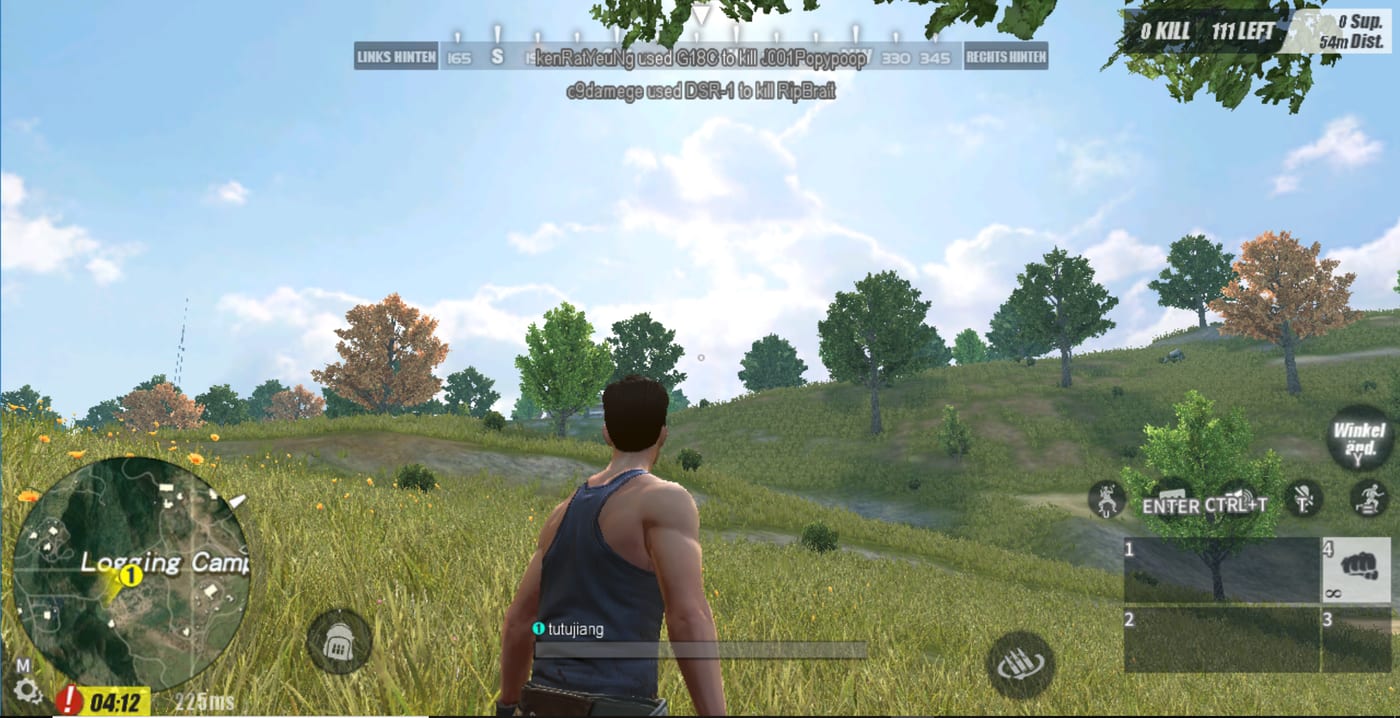
Classic Rules of Survival rewarded different skills depending on queue type. Solo taught self-reliance, independent decision-making, and the ability to recover from mistakes without a team to cover you. Squad play taught coordination, role specialization, and the discipline to subordinate personal gain for team survival. Rules of Survival Legacy targets PC under Myth Games, still Under Development as of September 2026, and will likely offer the same queue flexibility that made classic ROS memorable. This guide breaks down how every aspect of play鈥攍oadout, positioning, combat, and rotation strategy鈥攃hanges between solo and squad.
Understanding these differences before you queue prevented the common mistake of treating solo tactics like squad tactics and vice versa.
How solo and squad play fundamentally differ
Solo meant one life, one inventory, one set of eyes, and no one to blame for mistakes. Every decision鈥攆rom drop location to final circle鈥攔ested entirely on your shoulders. The absence of teammates changed not just your options but your risk tolerance and positioning philosophy.
Squad play meant shared information, distributed roles, revived teammates when the game mode permitted, and coordinated focus fire. Four players communicating effectively could take fights that solo players had to avoid entirely. The presence of teammates changed engagement math, rotation planning, and even loot priorities.
Loot strategy differences
Solo loot priorities
Solo players needed self-sufficient loadouts. Every piece of gear had to serve one player across all game phases鈥攆rom early looting through final circle. Prioritize:
Versatile primary weapon that worked at multiple ranges (AR like M4A1 or ACR) Secondary that filled gaps left by your primary Enough healing items to survive multiple fights without support Minimal attachment switching鈥攌eep loadout simple for quick decisions
Solo players could afford to greed for the best kit because there was no loot splitting argument. A fully-geared solo player had every advantage a squad’s best-equipped member had, plus sole ownership of every item.
Squad loot priorities
Squads required gear distribution across four players. Not every player needed full AR + sniper. Strategic loot splitting meant:
One player prioritized long-range weapons (DMR or sniper) One or two players focused on CQB weapons (SMG or shotgun) One player loaded up on healing items and support gear Attachments went to the players whose weapons used them most
Squad loot strategy was about covering all ranges and scenarios, not maximizing any single player’s loadout. See the Squad loadout guide for specific role-based priorities.
Positioning philosophy
Solo positioning
Solo players had to think about every angle because no teammate watched your back. Key positioning principles:
Never expose your back to unknown territory鈥攁lways keep an escape route Use terrain features that blocked multiple approach vectors Avoid clustering with other players鈥攍one wolves getting third-partied died alone Hold positions that let you see and shoot in multiple directions
Solo positioning was about self-preservation first. You could not count on a teammate to cover a flank while you healed or reloaded.
Squad positioning
Squads could divide coverage across multiple players. A four-player squad holding a building had 360-degree awareness if players communicated. Key squad positioning principles:
Stack defensive angles so every approach had crossfire coverage Designate players to watch specific flanks during heals or reloads Position so teammates could see and support each other during trades Use terrain to create overlapping sight lines, not competing angles
Squad positioning was about creating coverage networks. The sum of four players’ awareness exceeded what any solo player could achieve alone.
Combat engagement rules
Solo combat
Solo engagements meant fighting alone against unknown numbers. Core solo combat rules:
Engage only when you had positional advantage鈥攈igh ground, cover, or intel on enemy numbers. Solo players who forced fights without advantage rarely recovered from mistakes.
Disengage whenever third-party risk exceeded engagement reward. Solo players had no teammates to absorb the cost of a bad push. The math was simple: if you died, the game was over.
Manage consumables carefully. Every grenade and med kit had to stretch across the entire match. Waste a heal on a non-fight and you might lose the final circle to zone damage.
Squad combat
Squad combat meant coordinated pressure across multiple angles. Core squad combat rules:
Focus fire was the primary advantage鈥攖wo players shooting one target eliminated them before they could meaningfully respond. Never spread fire across multiple targets in early engagement phases.
Trade cover was available. When one player took damage, another could provide suppressing fire while the injured player healed. Solo players had no such luxury.
Push coordination required callouts and synchronized movement. A squad push without coordination was just multiple solo players running at the same enemy鈥攅asy to pick off one at a time.
See the Squad roles and Squad communication guides for how to organize combat roles and callouts.
Rotation strategy differences
Solo rotations
Solo players rotated:
When zone demanded movement鈥攄o not wait until last second when every other player was also rotating With full health and healing items available鈥攄o not rotate at low HP when unexpected contact could end the game Using terrain that covered approach angles鈥攕olo players had no teammates to watch their back during movement
Solo rotations were conservative by necessity. A dead solo player was a lost game.
Squad rotations
Squad rotations could be more aggressive because the team had redundancy. Squads rotated:
With designated overwatch鈥攐ne player covering while others moved With staggered timing so the squad was never all moving simultaneously Using vehicles for fast repositioning when open ground had to be crossed With a rally point so separated players could reunite quickly
Squad rotations used the team’s communication advantage to take risks a solo player could not. If one player was caught rotating, teammates could provide cover or distraction.
Loadout differences summary
Factor Solo Squad Primary weapon Versatile AR or SMG Role-specific (sniper, CQB, flex) Secondary Backup covering primary gaps Situational based on team needs Healing items High鈥攎ust cover all phases alone Distributed across team Attachments Keep simple for quick swaps Split by role priority Throwables Personal utility for own survival Team utility for coordinated plays Armor Maximize personal protection May sacrifice for support roles
See Solo loadout and Squad loadout for detailed kit planning.
When to queue solo vs squad
Solo improved individual skill faster. Every mistake was yours to analyze. No one else’s callouts or positioning choices affected your outcome. Serious players wanting to sharpen fundamentals queued solo.
Squad improved coordination and game sense. Learning to communicate, coordinate pushes, and manage shared resources developed different skills that solo queue never taught.
For fun, either worked鈥攂ut mixing queue types without adjusting your tactics was a fast path to frustration.
What Legacy may preserve
Myth Games has not confirmed whether Legacy offers the same queue types as classic ROS. Classic ROS supported Solo, Duo, and Squad queues. If Legacy follows the same structure, the tactical differences in this guide apply. Monitor Discord and updates for queue type announcements.
Related pages
Solo loadout 鈥?full solo kit planning Squad loadout 鈥?team gear distribution Squad roles 鈥?Vanguard, Scout, Anchor specialization Squad communication 鈥?callouts and coordination Circle strategy 鈥?rotation tactics for both queue types
Frequently Asked Questions
Quick answers to the most common questions.
What is the biggest tactical difference between solo and squad?
Redundancy. Squads have backup鈥攁 teammate can cover your heal, trade kills, or watch a flank. Solo players have no safety net, so every decision must be more conservative and every position must account for no backup.
Should I play solo or squad to improve faster?
Solo improves individual fundamentals faster鈥攜ou own every mistake and every success. Squad improves coordination and communication. Serious players often warm up with solo to sharpen mechanics, then squad for team practice.
Can I use a solo loadout in squad queue?
Not optimally. Squad requires role distribution鈥攜ou need long-range options, CQB specialists, and support players. A full solo-style loadout on every squad member creates gaps in coverage that coordinated enemies exploit.
How do squad rotations differ from solo rotations?
Solo rotations are conservative鈥攜ou move when safe, with full HP, using terrain that covers your approach. Squad rotations can be aggressive with overwatch cover, staggered timing, and vehicles because the team has redundancy if something goes wrong.
Will Legacy have solo and squad queues?
Unknown. Classic ROS offered Solo, Duo, and Squad queues. Myth has not confirmed Legacy queue structure. Watch Discord and Updates for announcements as development progresses.
How does combat change between solo and squad?
Solo combat requires positional advantage before engaging and strict disengagement discipline. Squad combat leverages focus fire, trade cover, and coordinated pushes鈥攁dvantages solo players cannot access.