Rules of Survival Legacy Close Combat Guide
Dominate interior fights, compound breaches, and final circle close-quarters battles with proven CQB tactics.
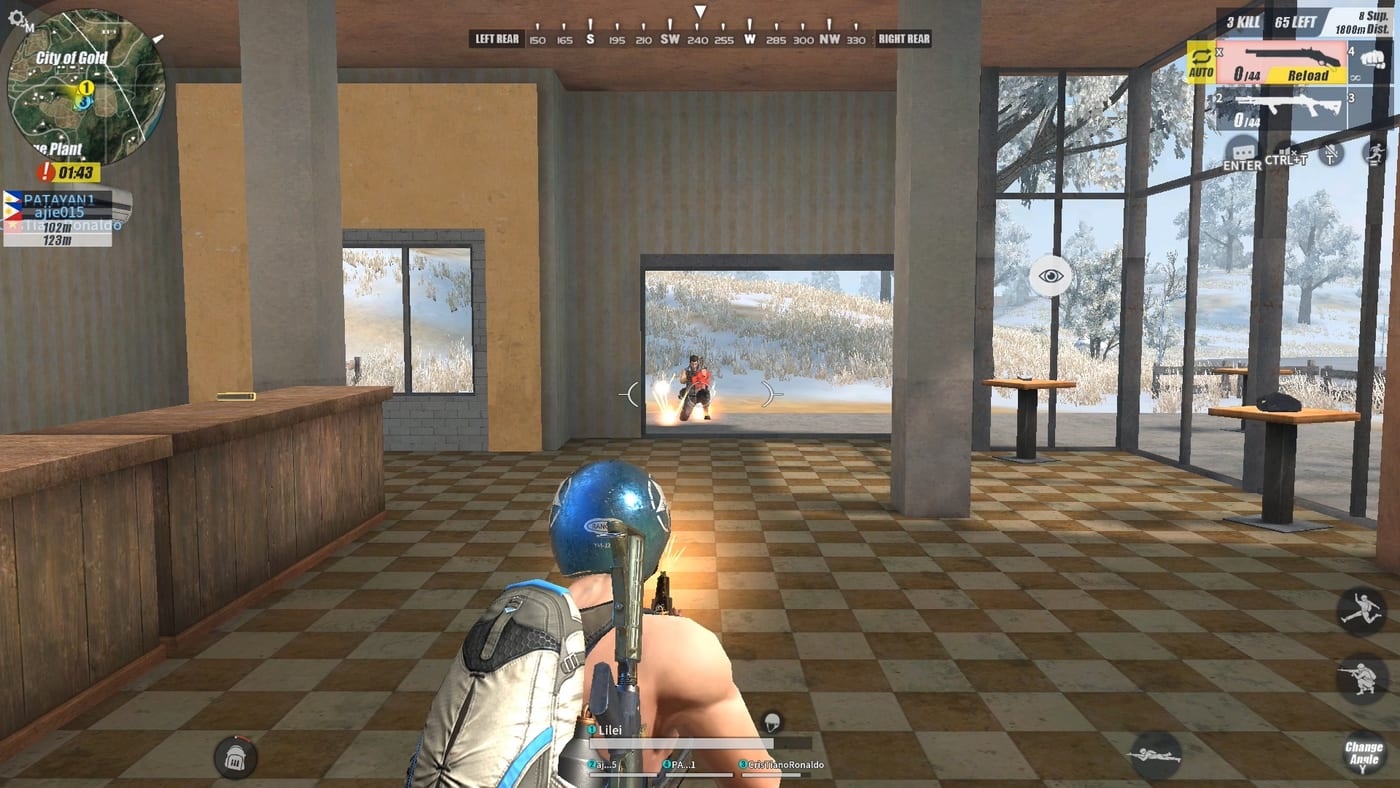
Close combat in Rules of Survival Legacy determines outcomes in buildings, dense terrain, and compressed final circles. When distances shrink to within fifteen meters, different skills govern survival than mid-range firefights. This guide covers the mechanics and tactics specific to CQB (Close Quarters Battle) situations.
Weapon selection for close combat
Classic ROS offered several weapon categories optimized for different CQB scenarios.
SMGs (Submachine Guns)
Thompson:
High damage per second in close range Large magazine capacity (high fire rate) Moderate recoil pattern Found commonly in military and industrial locations Best for: Sustained fire in room clearing
Vector:
Extremely high fire rate Lower per-bullet damage but fast time-to-kill Low magazine size without extended mag Best for: Fast elimination of isolated targets
UMP:
Balanced fire rate and control Moderate damage Better range than Thompson or Vector Best for: Players transitioning from AR to SMG
Shotguns
Sawed-off:
Extreme close-range damage Very limited effective range Two-round capacity before reload Best for: Ambush tactics and corner surprise
M1897 (pump):
One-shot potential at point-blank Slow pump action between shots Found in suburban and hunting locations Best for: Single-target room clearing
See Weapons tier list for complete damage profiles.
Hipfire fundamentals
At close range, aiming down sights (ADS) costs valuable time. Hipfire mastery separates elite CQB players from average ones.
When to hipfire:
Targets within 5-10 meters Multiple enemies in quick succession When the target is moving laterally During movement (jump-firing or strafe-shooting)
When to ADS:
Targets beyond 15 meters even in close quarters Single isolated target where precision matters When using a weapon with high recoil that needs stabilization Sniper or DMR in secondary close-range weapon situation
Movement in close quarters
Static positioning in CQB is death. Constant movement makes you harder to hit while maintaining offensive pressure.
Effective CQB movement patterns:
Strafing: Move left and right while maintaining aim on target. Alternate directions to make tracking difficult. Counter-strafe when enemy adjusts aim.
Bunny hopping: Small jumps to make your hitbox more difficult while closing distance. Effective in hallways and around corners.
Crouch spamming: Rapidly crouch and stand to disrupt enemy aim. Particularly effective at close range where enemy has less time to adjust.
Wiggle-peeking: Pre-aim a corner, then wiggle your crosshair into position without fully exposing yourself. Reduces exposure time.
Building-specific tactics
See Building Clearing guide for comprehensive interior tactics. This section adds close-combat nuance to those fundamentals.
Doorway management:
Clear corners systematically鈥攏ever assume a room is empty Use frag grenades to flush camping opponents When entering a doorway, move immediately to a wall to avoid being a stationary target
Stairwell combat:
Always check both directions when ascending or descending Hold the high ground advantage when possible Sound from footsteps echoes through stairwells鈥攎ove deliberately
Window engagement:
Enter through windows when door is compromised or watched Use windows for quick lateral movement between rooms Avoid standing still in windows鈥攖arget practice for enemies
Final circle close combat
Final circles often compress to building clusters or small open areas with minimal cover.
Final circle CQB principles:
Smoke early and often鈥攃over is scarce, smoke provides temporary safety Prioritize targets鈥攆inish wounded enemies first, then threaten healthy opponents Conserve ammo鈥攎ag dumps in final circle leave you defenseless for the next fight Control health pools鈥攄o not enter a final fight below 70% health without emergency items Position for third-parties鈥攚hile engaging, watch for weakened enemies to clean up
Weapon switching in close combat
Rapid weapon switching lets you use the right tool for each range within a CQB engagement.
Primary to secondary switching:
AR to pistol when primary is empty or during reload Secondary to knife for faster movement in building clearing Quick-swap binds allow faster switching than menu inventory
Bind recommendation:
Set weapon swap to a accessible key not used for other critical functions. Practice switching until it becomes muscle memory.
SMG vs AR in close range
The AR vs SMG debate in CQB has nuanced answers.
SMG advantages:
Higher fire rate for faster time-to-kill Lower recoil in hipfire Often better movement speed when equipped Smaller hitbox when ads-ing
AR advantages:
Works at both close and mid-range More forgiving accuracy requirements Higher per-bullet damage Better for players with tracking skill
Recommendation:
Use SMG as primary CQB weapon with AR for longer ranges. If forced to choose one weapon for final circles, AR with hipfire capability is more versatile.
Practice methodology
CQB skills require deliberate practice beyond normal gameplay.
Training suggestions:
Use any available training modes to practice strafe-shooting Record gameplay and review close-quarters engagements for positioning errors Focus on not dying to same tactic twice in a session Spend time in building-rich areas deliberately seeking CQB
Related pages
Building Clearing 鈥?interior combat fundamentals Weapons tier list 鈥?SMG and shotgun rankings Solo loadout 鈥?CQB-optimized kit Throwables 鈥?grenades in close combat Beginner Mistakes 鈥?common CQB errors to avoid
Preguntas frecuentes
Respuestas rápidas a las preguntas más comunes.
What is the best SMG for close combat in classic ROS?
Thompson and Vector were the top choices. Thompson offered sustained fire and large magazine, Vector offered fastest time-to-kill. Choice depended on playstyle鈥攁ggressive players preferred Vector, methodical players preferred Thompson.
Should I hipfire or ADS in close quarters?
Hipfire is faster but less accurate. At under 10 meters, hipfire is usually correct. Beyond that distance or against precise enemies, ADS becomes necessary. Practice both to know your weapon's hipfire accuracy limits.
How do I improve my close combat reaction time?
Reaction time is partially hardware (monitor refresh rate, mouse) and partially practice. Train by deliberately seeking close-range engagements and reviewing footage to identify delays in your response sequence.
What movement pattern works best in CQB?
Strafing combined with crouch spamming offers the best protection while maintaining aim. Jump-firing is riskier but effective in hallways. Change patterns to avoid predictability against experienced opponents.
How do I handle multiple enemies in close combat?
Prioritize the most immediate threat (usually closest or lowest health). Use grenades to create space and split enemy attention. If overwhelmed, consider disengaging to reposition rather than dying in place.